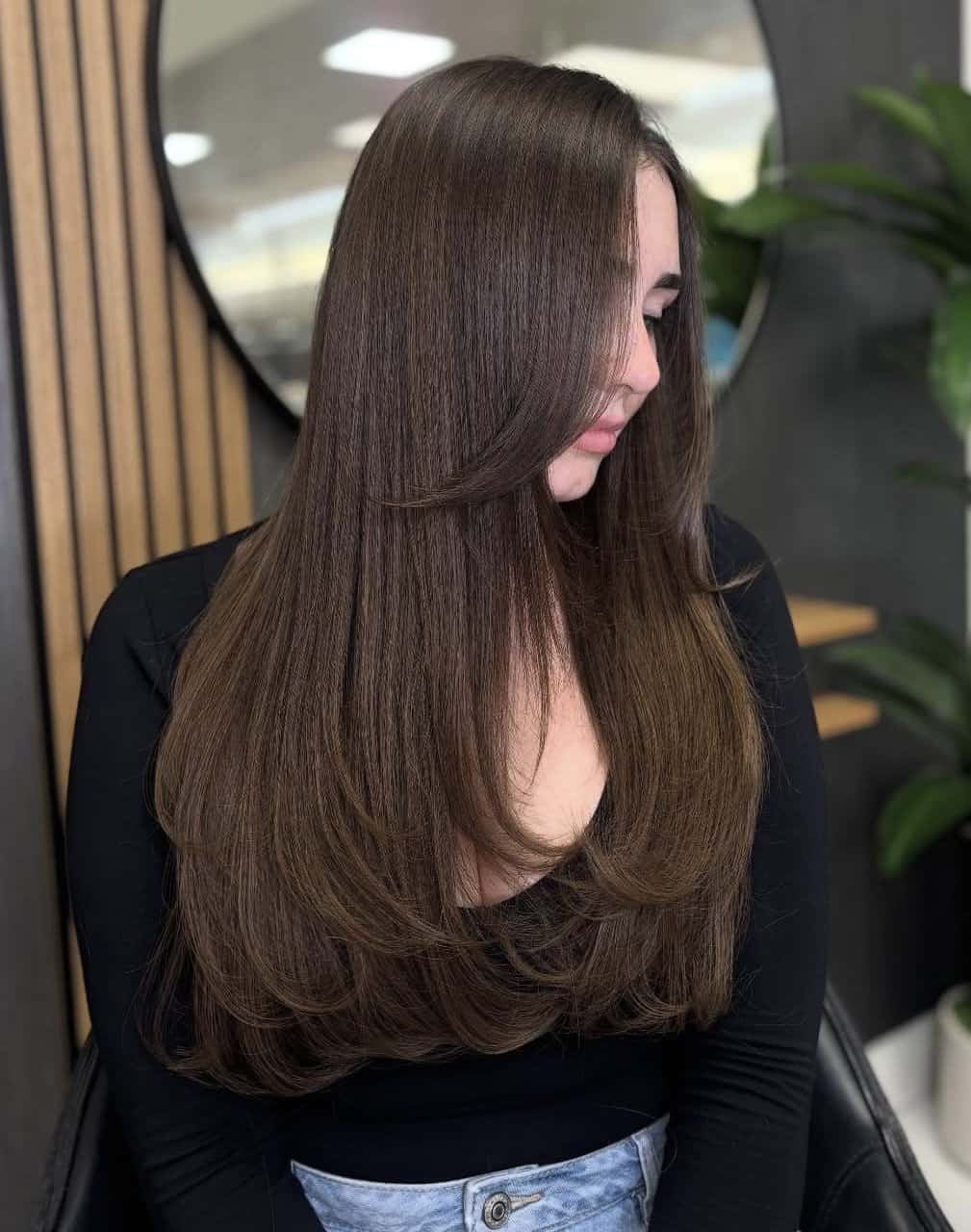
You might have noticed more stylists talking about mini links instead of nano rings. Nano rings have been a salon favourite for years, but mini links are quickly becoming the go-to choice for clients wanting something lighter, smaller, and less noticeable once fitted.
Mini links and nano rings are both discreet, no-heat hair extension methods, but mini links are smaller, lighter, and increasingly preferred by stylists for finer hair and more seamless results.
At Foxy, we’ve noticed clients are becoming far more aware of comfort, scalp tension, and how visible their fittings are day-to-day. People still want length and volume, but they also want extensions that feel soft, flexible, and easy to wear.
Read on to discover:
Mini link hair extensions are an ultra-small, lightweight extension method designed to create natural-looking results with minimal visibility. They use tiny beads to attach the extension hair to your natural hair without the need for glue, heat, or adhesive.
At first glance, they can look similar to nano rings, but mini links are typically even smaller and lighter. That reduced weight is one of the main reasons they’ve become increasingly popular for fine or thin hair.
Because the fittings are so small, mini links tend to sit more discreetly against the scalp and move more naturally with the hair. Many stylists now prefer them for clients who want extensions that feel softer, more flexible, and less noticeable day-to-day.
Another big advantage is comfort. At Foxy, one thing we hear regularly from clients switching from older methods is that mini links often feel “lighter” almost immediately after fitting.
Mini links are one of the most lightweight and least visible hair extension methods currently available, making them especially popular for finer hair and natural-looking results.
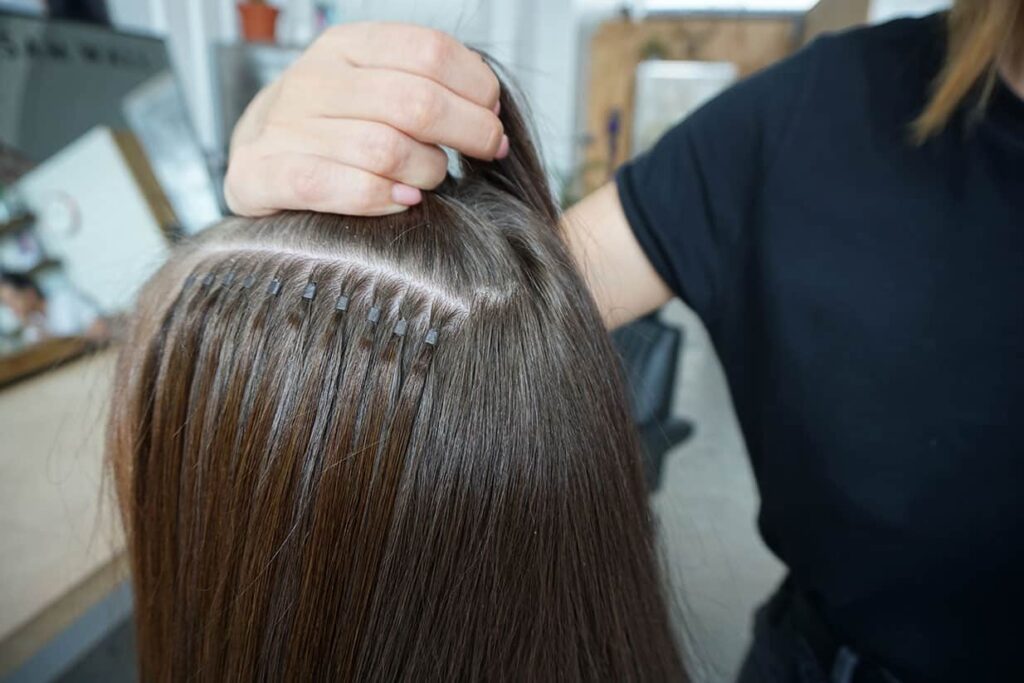
Nano ring hair extensions are a popular no-heat extension method that uses tiny metal beads to attach extension strands to your natural hair. The extension is threaded through a small ring, which is then clamped securely in place without glue, tape, or heat.
They’ve been one of the most widely used extension methods in UK salons for years because they offer a good balance between natural-looking results, durability, and flexibility.
One of the reasons nano rings became so popular is their discreet size compared to older micro ring systems. The smaller beads are much less visible in the hair, making them a great option for clients wanting a more seamless finish.
Nano rings also allow for natural movement and versatile styling, which is why many clients still love them for longer-term wear.
We’ve found nano rings remain a really strong all-round option, especially for medium hair types or clients wanting a secure, reusable method without heat or adhesive.
They may no longer be the newest method on the market, but nano rings are still considered one of the most trusted and discreet extension systems available for a wide range of hair types.

At first glance, mini links and nano rings can look very similar. Both are discreet, no-heat methods designed to create natural-looking extensions without glue or tape. But once you look closer, there are some important differences that affect comfort, visibility, and how the extensions feel day-to-day.
The biggest difference is size.
Mini links are smaller and lighter than nano rings, which is why they’ve become increasingly popular for finer hair types. The reduced weight means less pull on the natural hair and a softer overall feel once fitted.
Nano rings are still considered small compared to older extension methods, but they’re slightly bulkier than mini links.
Both methods are designed to be discreet, but mini links tend to be even less noticeable, especially around finer areas like the hairline or crown.
This is one of the biggest reasons stylists are starting to favour them for clients who wear their hair up regularly or want the fittings to feel virtually invisible.
At Foxy, we’ve noticed many clients switching to mini links specifically because they feel more confident styling their hair in ponytails and slick-back styles.
Mini links usually create less tension on the scalp because they’re lighter and more flexible. Many clients describe them as feeling softer or easier to forget once fitted.
Nano rings are still comfortable for most people, but some clients notice the fittings slightly more, especially if they have finer hair.
Mini links are generally best for:
Nano rings are better suited to:
Both methods usually require maintenance every 6–8 weeks depending on hair growth and aftercare.
The main difference isn’t lifespan, it’s how lightweight and invisible the extensions feel between appointments.
Mini links are smaller and lighter, making them more discreet and ideal for finer hair than nano rings.
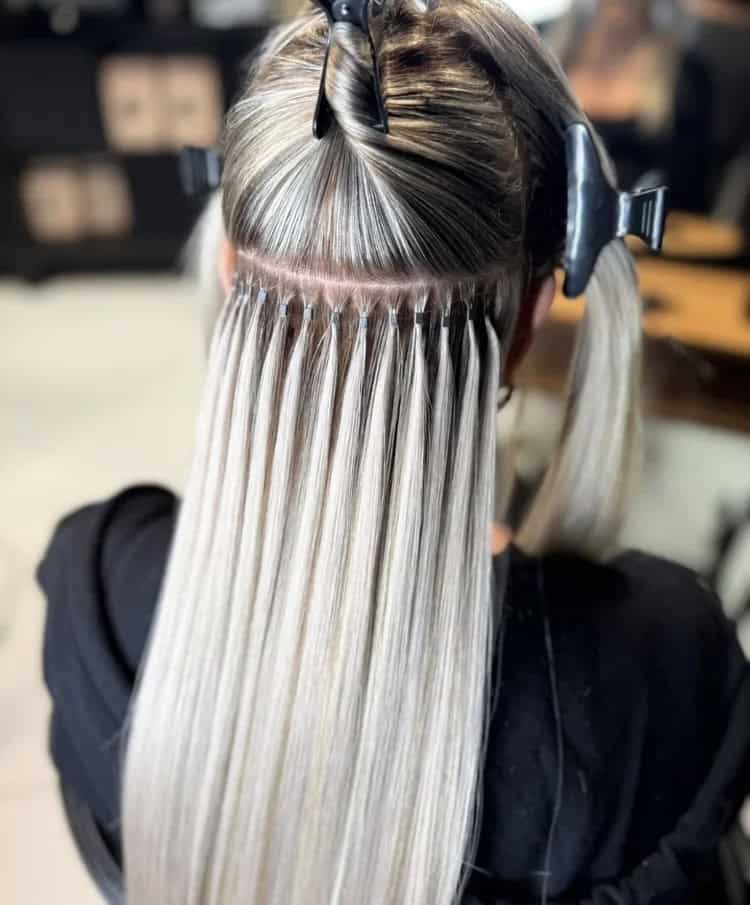
One of the biggest reasons people get confused about extension methods is because mini links, micro rings, and nano rings all sound very similar. In reality, they’re quite different in terms of size, weight, visibility, and who they’re best suited for.
Micro rings were one of the original no-heat extension methods and were incredibly popular years ago. They use a larger metal bead to attach the extension hair to your natural hair.
The problem is, compared to newer methods, micro rings are much bulkier and heavier. On thicker hair, that may not always be an issue. But on fine or thinner hair, they can become much more visible and place more tension on the scalp.
That’s why many stylists now see micro rings as a more outdated option for finer hair types.
At Foxy, we rarely see experienced stylists recommending traditional micro rings for clients wanting lightweight, invisible results.
Nano rings became the next evolution of micro rings. They use a much smaller bead, making them more discreet and comfortable to wear.
For years, nano rings have been considered the “gold standard” for clients wanting:
They’re still hugely popular in UK salons and remain one of the most trusted extension methods available.
Mini links are the newest and most lightweight option of the three. They’re even smaller and lighter than nano rings, which is why so many stylists are now moving towards them for finer hair types.
The reduced size makes them:
This is where the industry is clearly shifting. Clients are becoming far more aware of comfort, scalp tension, and how noticeable their fittings feel in real life, not just immediately after fitting.
If micro rings were the original system, and nano rings became the modern standard, mini links are quickly becoming the next evolution of discreet extension methods.
One of the biggest reasons stylists are switching to mini links is comfort. Because the fittings are smaller and lighter, they tend to feel less noticeable once installed.
Clients with finer hair often mention that mini links feel softer and more flexible compared to traditional ring methods. This matters more than ever now that clients expect extensions to feel natural day-to-day, not just look good in photos.
Modern clients want invisible extensions. They want to wear their hair up confidently, style it freely, and avoid bulky fittings showing around the hairline or crown.
Mini links help achieve that because the fittings are incredibly small and sit more discreetly within the natural hair.
At Foxy, we’ve noticed stylists increasingly choosing mini links for clients who specifically ask for “undetectable” extensions.
Less weight usually means less tension.
Because mini links are so lightweight, they can reduce pressure on delicate or finer strands compared to heavier methods. This is a huge advantage for stylists focused on long-term hair health and client retention.
Fine hair can struggle with larger, heavier fittings over time. Mini links are often better suited because they create a more lightweight attachment point that moves naturally with the hair.
Many stylists find they hold particularly well on finer hair when fitted correctly.
There’s also a clear industry trend towards more lightweight, scalp-conscious extension systems.
Clients today are more educated than ever. They ask about comfort, damage prevention, and discreetness, not just length and volume. Offering mini links allows stylists to position themselves as modern, trend-aware, and focused on premium results rather than older one-size-fits-all methods.
The best extension method for you depends on your hair type, how you wear your hair day-to-day, and what kind of finish you want. While both mini links and nano rings create natural-looking results, one may suit your hair and lifestyle better than the other.
Mini links are usually the best option for fine or thinner hair. Their smaller, lighter design makes them less visible and more comfortable, especially around delicate areas like the hairline and crown.
If your priority is:
…mini links are likely the stronger choice.
If your hair sits somewhere in the middle, both methods can work really well.
Nano rings remain a great all-round option for medium-density hair because they’re durable, flexible, and widely trusted by salons across the UK. But mini links can still be a fantastic choice if you want something softer and less noticeable.
This often comes down to personal preference and styling habits.
Nano rings are usually the better option for thicker hair types. They provide slightly stronger support and durability for clients wanting more density, length, or fullness.
Thicker hair can comfortably support slightly larger fittings, so visibility is less of a concern compared to finer hair.
Your routine plays a big part in choosing the right method.
If you:
…mini links are often preferred.
If you want:
…nano rings remain an excellent option.
The best method is the one that fits naturally into your everyday life, not just the one that looks good immediately after fitting.
Both mini links and nano rings are popular no-heat extension methods, but they each have their own advantages depending on the client, hair type, and desired finish.
Mini links are one of the lightest extension methods currently available. This makes them especially popular for fine or fragile hair where reducing tension is important.
Their smaller size helps them sit more invisibly within the hair, especially around finer areas like the crown and hairline.
Because they create less weight and bulk, mini links are often better suited to lower-density hair types.
Many stylists now prefer mini links specifically for clients who previously felt traditional fittings were too noticeable.
Mini links are still relatively new compared to nano rings, so not every salon currently offers them.
Because the fittings are so small, application technique matters. Proper placement and fitting are essential for the best results and retention.
Nano rings have been trusted in UK salons for years and remain one of the most established no-heat extension systems available.
Because they’ve been around longer, more stylists are trained and experienced in fitting nano rings.
Nano rings are known for their strong hold and long-lasting wear, especially on medium or thicker hair types.
Although still lightweight compared to older methods, nano rings are slightly heavier than mini links.
Clients with very fine hair sometimes notice this difference more over time.
Nano rings are still discreet, but mini links tend to blend more seamlessly due to their smaller size and lighter structure.
This is one of the main reasons many stylists are beginning to shift towards mini links for premium, ultra-natural results.
When it comes to mini links vs nano rings, neither method is “bad”, but they do suit different clients and hair types. Nano rings are still one of the most trusted and widely used extension methods in UK salons. But mini links are quickly becoming the preferred choice for clients wanting something lighter, more discreet, and more comfortable for finer hair.
In simple terms:
At Foxy, we’re seeing a clear shift towards lightweight, scalp-friendly methods that prioritise comfort just as much as appearance. Clients still want length and volume, but they also want extensions that feel natural enough to wear every single day without constantly noticing the fittings.
Before choosing your method, think about:
If you’re considering nano rings, explore our professional-grade Nano Tip Hair Extensions designed for lightweight, natural-looking results.